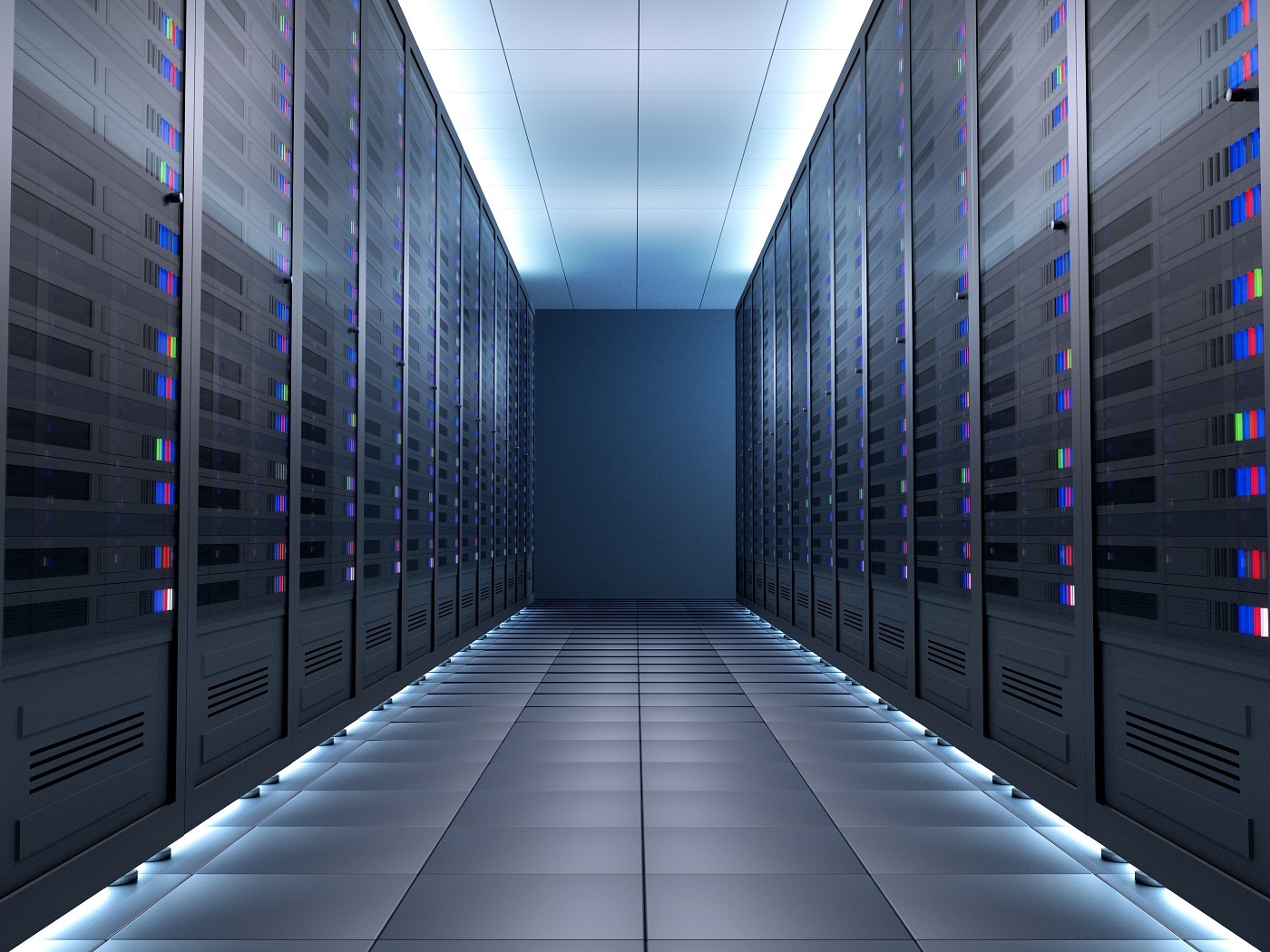


In our modern world of physical infrastructure, space has become our most expensive and finite commodity.
Let us think of today’s data centers like crowded cities. For years, we expanded outward, adding more racks, more cables, more complexity. But today, we’ve run out of room to “build out.” The only way forward is to build smarter within the same footprint.
This is where multi-fiber connectivity, MPO and emerging MMC, becomes critical. It’s the shift from suburban sprawl to vertical efficiency.
Want to experience this shift instead of just reading about it?
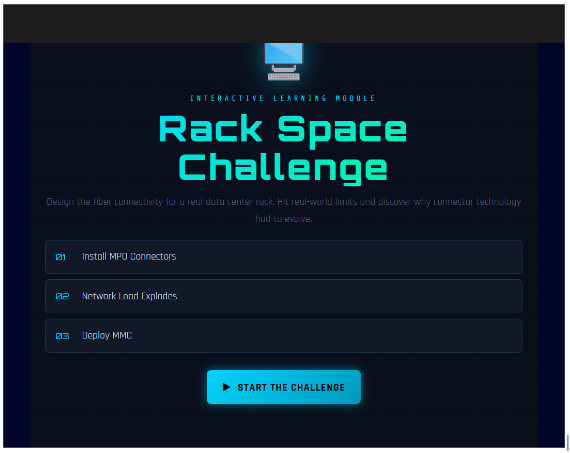
I’ve created a 2-minute interactive learning module that simplifies MPO & MMC through a gamified journey.
Explore it here
What’s Changing?
Traditionally, data centers relied on single-fiber connections (like LC connectors), one fiber per link.
Now, with rising demands from:
- AI workloads
- 400G / 800G networks
- Hyperscale data centers
We need many fibers working together simultaneously.
This led to the development of MPO (Multi-Fiber Push-On) connectors.
- Instead of one fiber, 8, 12, or 24 fibers in one connector
- Deployment times have reduced from days to hours.
- Massive space savings, with up to 6x more fiber in the same rack space
Important note:
You may hear the term MTP, this is not a different category, but simply a high-performance version of MPO.
For simplicity, we will refer to the category as MPO throughout.
Where MPO Fits Today
MPO has become the backbone of modern data centers:
- Used in trunk cabling (core network highways)
- Standard for 100G–400G connectivity
- Enables plug-and-play deployments
- Reduces installation time and human error
The Next Leap: MMC
While MPO solved the first wave of density challenges, AI and hyperscale environments are pushing limits further.
That’s where MMC (Multi-fiber Micro Connector) comes in.
What makes MMC different?
- ~3x higher density than MPO
- Smaller footprint, allowing far more connections in the same space
- Designed for 800G, 1.6T and AI clusters
- Backward-compatible with existing MPO ecosystems
How This Plays Out in Real Data Centers
Modern architectures are becoming layered:
1. MPO, The Backbone
- Connects racks, switches, and data halls
- Handles bulk data movement
2. MMC, The Dense Core
- Used inside AI clusters and GPU fabrics
- Enables ultra-high port density
- Maintains airflow (critical for cooling AI hardware)
Together, they create a seamless connectivity stack, from long-distance transport to ultra-dense compute environments.
Market Momentum
The data center and MPO connector markets are growing rapidly as the need for higher bandwidth and faster deployments continues to rise. This growth is being driven by increasing demand from AI and machine learning workloads, expanding cloud infrastructure, and the rollout of 5G networks.
Challenges to Keep in Mind
While the opportunity is strong, successful execution is critical.
- Operational Complexity: Handling more fibers requires greater precision, and cleaning and inspection become essential.
- System Design Risks: Errors in polarity and mapping can disrupt entire network links.
- Interoperability: Mixing different standards and vendors requires careful planning and coordination.
- Testing & Validation: Higher fiber counts demand more advanced testing tools and processes.
- Cost vs Adoption: MPO is a mature and cost-effective solution, while MMC is more premium and still evolving.
What Lies Ahead
The direction forward is clear, with several key trends shaping the future.
- Higher Fiber Counts: The industry is moving from 12/24 fibers to 48 or more fibers per connector.
- AI-Driven Infrastructure: MMC is likely to play a major role in hyperscale and AI-focused deployments.
- Hybrid Ecosystems: MPO and MMC are expected to coexist for the foreseeable future.
- Efficiency as a Priority: Reducing cabling will improve airflow and help lower overall energy consumption.
STL’s Commitment to Innovation
At STL, we bring together our deep experience in Glass and Fiber to develop these high-performance fiber specifications. By combining this with our cable design competency, we develop specialized cables tailored specifically for data center applications. To ensure our partners can deploy these technologies with speed and precision, we are now offering pre-terminated cable assemblies, providing a plug-and-play solution that reduces installation complexity and ensures peak performance from day one. Explore more on STL Data Center solutions here: https://stl.tech/stl-neuralis-datacenter/