
hide

From Our Glass to your Data Center Network

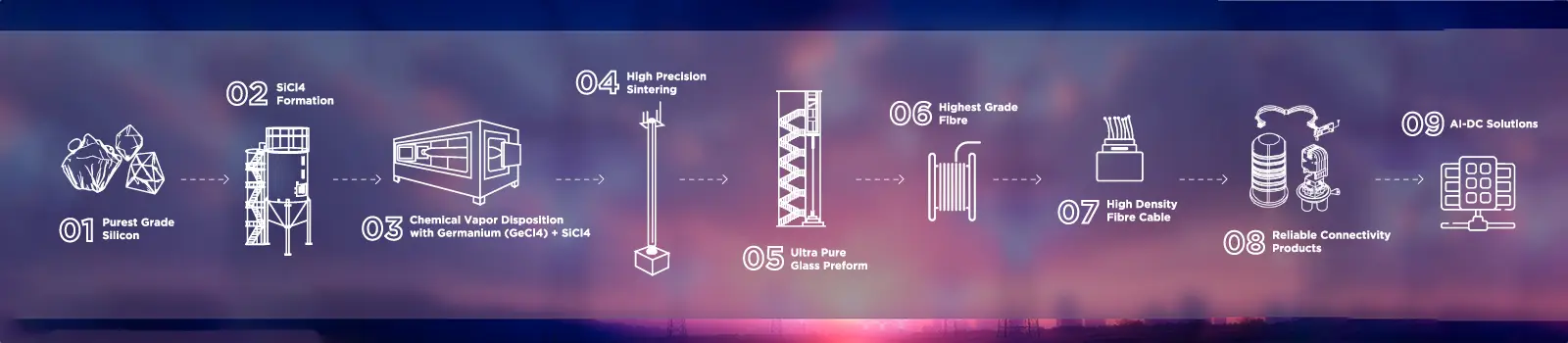
Leverage the power of STL’s end-to-end vertical integration. From glass preform and fiber drawing to advanced cable production and pre-terminated solution.

Introducing STL Neuralis, The Backbone of Intelligence

STL Neuralis draws its name from the intelligent, interconnected pathways of a neural network, symbolizing seamless connectivity and speed.

Acting as the central nervous system for Data Center infrastructure, STL Neuralis Data Center portfolio provides the robust, high-performance foundation necessary to process, scale, and power the most demanding Data Center workloads.

STL Data Centre Product Portfolio Structure

The STL Neuralis Infrastructure

STL telecom network solutions graphic
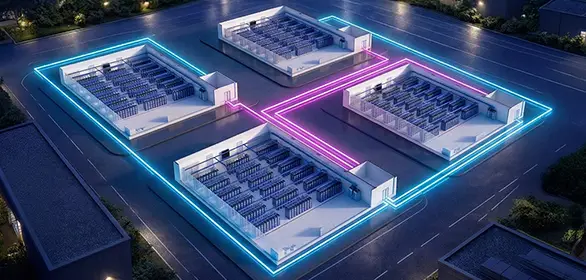
Data Center Interconnect

Data Center Interconnect (DCI) is the high-speed optical backbone that links data center buildings to one another - enabling the seamless, low-latency flow of data across campuses, metros, and regions that modern cloud and AI workloads demand. STL brings DCI expertise helping operators build interconnect infrastructure that scales efficiently, meets the strictest global standards, and keeps pace with the accelerating demands of AI-era data centers.
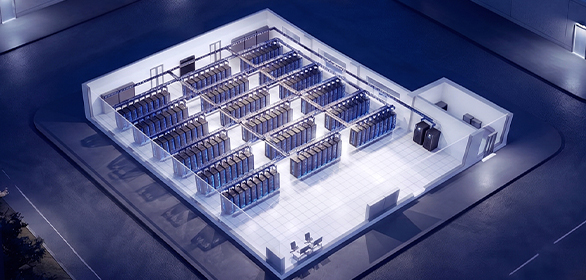
Data Center Whitespace

Data Center Whitespace refers to the purpose-built space with a data center facility where critical IT infrastructure - relating to compute, storage, and networking - is deployed alongside the power and cooling systems that sustain it. STL enables organisations to maximise whitespace utilisation, reduce operational complexity, and build data center environments that scale seamlessly as business demands evolve.


STL for Hyperscalers, Neoclouds and Enterprises

STL for Hyperscalers

The most demanding fibre environments ever built. GPU clusters require optical port counts that overwhelm traditional architectures. STL’s hyperscale portfolio is engineered for this reality.

Key Features

Design Importance: A single AI GPU building can exceed 6,000 optical connections. Every duct pull must be specified for hardware not yet designed.

Key Hyperscale Products

STL for Neoclouds

Infrastructure serving multiple tenants with different architectures, at unpredictable growth rates, with zero tolerance for service interruption.

Key Features

Operational Importance : Every tenant onboarded without a cable pull is direct margin. Dark fibre reserve makes it a software event, not a construction event. 

Key Neocloud Products

STL for Enterprise Data Centres

Constrained budgets, mixed-vendor environments, fire-rating compliance, and legacy infrastructure running alongside new high-density deployments in the same rack.

Key Features

Migration Importance : Run 10G legacy and 400G simultaneously. STL’s multi-base enclosures serve both from one chassis, indefinitely. 

Key Enterprise Products

Powering Next-Gen Data Centers

Purpose-built optical infrastructure for every segment of the data center market — from
the largest hyperscale campuses to enterprise-grade hybrid environments.

1

Hyperscalers

Hyperscalers operate at a scale where every design choice of fiber density to pathway routing compounds across thousands of racks and multiple buildings. They need partners who can match their pace of deployment and deliver across geographies.

STL brings a globally integrated manufacturing and design capability, expertise in high-density optical environments, and standards-compliant network buildouts. Where massive data halls and linking facilities across metros are connected. STL gives an edge to hyperscalers move from blueprint to bandwidth rapidly
2

Neoclouds

Neoclouds are specialized cloud providers which are GPU-dense purpose-built for AI workloads from day one. Their infrastructure demands are higher fiber counts per rack, tighter latency tolerances, and faster deployment timelines than traditional builds.

STL understands this emerging architecture and with end-to-end optical and fiber connectivity tailored for high-density compute environments, STL enables Neoclouds to build AI-ready infrastructure quickly and efficiently.
3

Enterprise Data centers

For enterprises, the data center journey is often complex — it involves modernising existing infrastructure and planning for workloads that are shifting rapidly towards AI and edge computing. Enterprises have to achieve this without disrupting business continuity.

STL partners to design, build, and connect data center environments that are adaptable for tomorrow, bringing the same optical expertise and engineering rigour trusted by hyperscalers, but applied with the consultative approach that enterprise environments require.

STL Neuralis for Hyperscalers, Neoclouds and Enterprises

We Own the Base of the Supply Chain — The Glass

STL manufactures its own glass preforms — the silica cylinders from which all optical fibre is drawn. Owning the base of the supply chain means that when fibre demand spikes — as it did during 5G, during broadband stimulus, and during AI build cycles  

This supply chain position also enables us to develop specialty fibres that assemblers simply cannot access: Multi-Core Fibre (MCF), Hollow-Core Fibre (HCF), bend-optimised 200µm and 165µm formats — the fibre technologies the next generation of AI interconnect will be built on – Supply chain security is a data centre infrastructure requirement. STL owns the supply chain. 

We Co-Create — Not Just Configure

Most fibre vendors will configure a cable from a catalogue. STL will co-engineer a solution with you — and the outputs are real: field-qualified, manufacturable, and delivered on your project timeline, not ours. 

A recent example: STL’s Pink Slic® fibre — a bend-optimised, ultra-low-loss optical fibre co-developed with network operators for ultra-high-density deployment environments where standard fibre geometry creates routing constraints. This is the output of genuine co-creation — operator challenge with STL’s PhD-led R&D team that turns engineering challenges into deployable outcomes.

Built on Decades of Depth

30 years of industrial-scale fibre manufacturing. The most stress-tested supply chain in the industry. STL has been the fibre backbone for telecom operators across Asia, North America, and Europe for 30+ years — through 5G, broadband build-outs, and the first hyperscale wave. We don’t position for cycles. We deliver through them.  

That depth means our manufacturing quality systems have been tested at industrial scale across the world’s most demanding networks. Every data centre cable ships to the same telecom-grade standards — across five cable facilities, four fibre facilities, four connectivity facilities.

How STL Is Ready to Enable the Network Infrastructure for the AI Century

A single AI cluster can need 50,000–100,000 optical connections.The transition to 400G and 800G means higher-speed transceivers now consume more fibres per port, not fewer. And every campus cable buried today must carry traffic from GPU hardware that has not yet shipped. The only rational specification is maximum fibre count, with a partner who can deliver it.   

MMC Connector Ecosystem

Full MMC 12F, 16F, 24F range. Up to 3456F per 1U — co-developed with hyperscale operators for GPU fabric. 

Campus Scale 6912F in a Single Pull

Celesta 6912F serves a full GPU compute building in one duct pull — with 62% of duct space still free.

Supply Security Through AI Build Cycles

Glass preform ownership and multi-continent manufacturing insulate delivery from supply shocks that disrupted other vendors during AI build cycles. 

Co-Created for AI Topologies

AI topologies are non-standard. STL’s PhD-led R&D team co-engineers fibre counts, connectors, and configurations for your specific fabric — not a catalogue product forced into an approximation.

400G / 800G Optics Ready

Pre-terminated trunks and enclosures qualified for 400G and 800G transceiver insertion loss budgets. I/O cable eliminates the greyspace splice — recovering 0.5–1.5dB of optical budget exactly where AI link margins are tightest. 

Specialty Fibre MCF & HCF Ready

STL manufactures Multi-Core Fibre (MCF) and Hollow-Core Fibre (HCF) — the fibre technologies being evaluated for next-generation AI interconnect architectures. When the industry transitions, our customers are already partnered with the manufacturer leading it. 

Vertically Integrated Glass to Terabit Portfolio

We Make Our Own Glass

STL manufactures its own glass preforms; these are the glass cylinders from which all optical fiber is drawn. Owning the base of the supply chain is important, especially during times when fiber demand spikes.
This fiber independence enables STL to develop specialty fibers as we did with Multi-Core fiber (MCF), bend-optimised 200µm, 180 & 160µm formats ; these are the fiber technologies the next generation of AI GPU connectivity will be built on.


Built on Decades of Depth

With 30 years of industrial-scale fiber manufacturing, STL has been the fiber backbone for network builders across Asia, North America, and Europe.

We Co-Create

No two data centers are same and therefore STL cocreates solutions which are tailor-made for your data center build.

STL leadership and abstract corporate presentation banner

STL deepens partnership with Netomnia to accelerate the UK’s future-ready full-fibre rollout

End-to-end FTTH solutions from advanced optical fibre cables to high-performance connectivity to speed rollout and lower total cost of ownership

R&D Driven

With in-house expertise in glass science, material science, precision manufacturing, big picture understanding of network architectures, deep understanding of networking deployment and operations, STL brings complete control and predictability across digital connectivity value chain.

slimmest IBR cable

STL launches the world’s slimmest IBR cable with 864F for hyperscalers in the United States

STL’s Celesta IBR Cable combines robust performance for duct installations with the productivity of high-count mass fusion splicing.

STL website background banner design

STL and QNu announce collaboration to advance research in leveraging quantum communications over optical fibre

QNu Labs, incubated at IIT Madras Research Park in 2016 and backed by the National Quantum Mission.

STL website background banner design

STL redefines Optical Connectivity with India’s first Hollow Core fibre cable for Data Centre networks

STL a leading connectivity solutions provider for AI-ready digital infrastructure, today announced a significant..

India’s First Quantum-secured network

STL showcases its high-density, Unitube Indoor Optical Fibre Cable using Multi-Core Fiber (MCF) in Connected Britain 2025

QNu Labs, incubated at IIT Madras Research Park in 2016 and backed by the National Quantum Mission.

AI is Rewriting the Physical Layer

AI clusters can need 50,000–100,000 optical connections — exceeding entire legacy campus plants. At 400G/800G, higher-speed transceivers consume more fibres per port. Every cable buried today must serve GPU hardware not yet designed. Conservative fibre count specification is finished. 

Supply Chain Resilience is Now a Board-Level Risk

The 2020–2023 shortage cycle exposed every vendor without upstream manufacturing ownership. Preform supply became a bottleneck that cascaded through resellers simultaneously. For multi-phase builds, raw material resilience is now a tier-1 specification requirement. 

Specifying for 800G and Beyond

The gap between specifying campus cable and first 800G deployment is typically 3–5 years. By 1.6T, the cable plant buried today is the only physical layer available. Specify for hardware not yet announced — with dark fibre reserve for two or three future transceiver generations. 

Campus Duct is the Scarcest Infrastructure Asset

Campus duct cannot be meaningfully expanded once a campus is operational. The fibre count at the initial pull is the highest-leverage specification decision in any build. A 6912F cable in a 110mm duct occupies ~38% of cross-section — leaving 62% free. Lowest total cost of ownership for any route used beyond Year 5. 

VSFF Connectors are the New Hyperscale Default

MMC delivers 3,456 fibres per 1U — versus 576 from a 72-port MPO-8 panel. For 51.2Tbps spine switches, that is 1U versus 6U of patch field for the same switch. The VSFF transition is already underway on AI-first builds and requires ecosystems supporting both formats during migration. 

Co-Created Infrastructure Outperforms Catalogue Solutions

Catalogue products serve median use cases. Hyperscale architectures rarely are median. Forcing catalogue products into non-standard topologies produces insertion loss failures, compliance issues, or routing constraints requiring costly workarounds. Co-creation — engineering bespoke to field-qualified product — is what separates tier-1 infrastructure partners 

Explore our Data Center Solutions
for India and Middle East.

Frequently Asked Questions

A data center is a facility housing the compute, networking, storage, and power infrastructure that processes and transmits data at scale. Every cloud service, AI application, and enterprise system runs in one. They range from single-room server rooms to multi-building campuses consuming hundreds of megawatts — all dependent on physical fiber connectivity.

Modern applications require compute and networking beyond what any single building can provide. With AI, the need has grown dramatically — LLM training requires GPU-dense clusters at densities previous generations could not anticipate. The data center is the operational core of the global economy.

Enterprise / Private — Single-organisation facilities serving internal applications and private cloud. Typically a few hundred kilowatts to a few megawatts.

Colocation — Multiple organisations rent space and power; the operator owns the building, tenants manage their own equipment.

Hyperscale — 100MW+ facilities operated by the world's largest technology companies, pushing the frontier of what connectivity infrastructure can deliver.

Neocloud / MTDC — Hyperscale-density multi-tenant facilities selling capacity to enterprise and AI customers.

Hyperscalers are the companies which own massive, global networks of very large data centers. They provide computing power that scales as per the requirement of their customers. Their main strength is their massive size and the ability to offer hundreds of different services under one roof.

A neocloud is a specialized, next-generation cloud provider focused exclusively on providing GPU-as-a-Service (GPUaaS) to handle massive AI, machine learning, and data-intensive workloads. Neoclouds claim to offer faster access to high-performance GPU infrastructure at optimized costs.

Enterprises are large, established organizations, from banks, manufacturing organizations, service firms, airlines and other industries that use technology to run their business operations. They focus on security, stability, and integrating new tech with their existing legacy systems.

Get in Touch

Your input is valuable to us. Fill out the form below and we’ll get in touch as soon as possible.

Contact STL Sales