
Simplifying last-mile fiber delivery to individual homes with fast deployment and clean connectivity.
Efficient fiber distribution across multi-tenant buildings with speed, scalability, and control.
End-to-End, fiber-dense portfolio designed to build faster, more resilient, and future-ready optical networks.
Build the central intelligence of the network with high-density fiber management and scalable distribution.
Extending fiber deeper into low-density geographies with resilient, long-reach network design.
Powering high-density digital infrastructure with fiber systems built for scale, speed, and uptime
Explore Solutions →Deliver reliable, high-performance connectivity for enterprise networks, campuses, and critical operations.
Unified Communication platform, featuring a comprehensive suite of UCaaS, CCaaS, and CPaaS offerings.
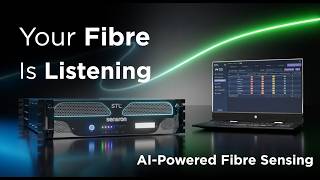
Explore Solutions →Fiber optic sensing solution designed for critical infrastructure security and monitoring
Explore Solutions →CENTRAL OFFICE
NEIGHBOURHOOD
HOMES
CAMPUS/DATA CENTRES

ENTERPRISE

HYPERSCALE

End-to-end passive optical connectivity for homes and business. From the central office to the inside the home.
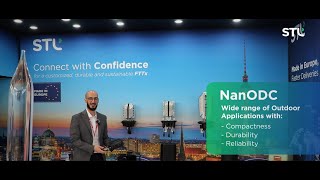
STL delivers fiber and copper structured cabling for internal networks, alongside high-density optical backbones for metro and long-distance connectivity—ensuring seamless, scalable enterprise infrastructure.
Structured cabling and LAN solutions—fibre, copper, and FTTA for enterprise networks.
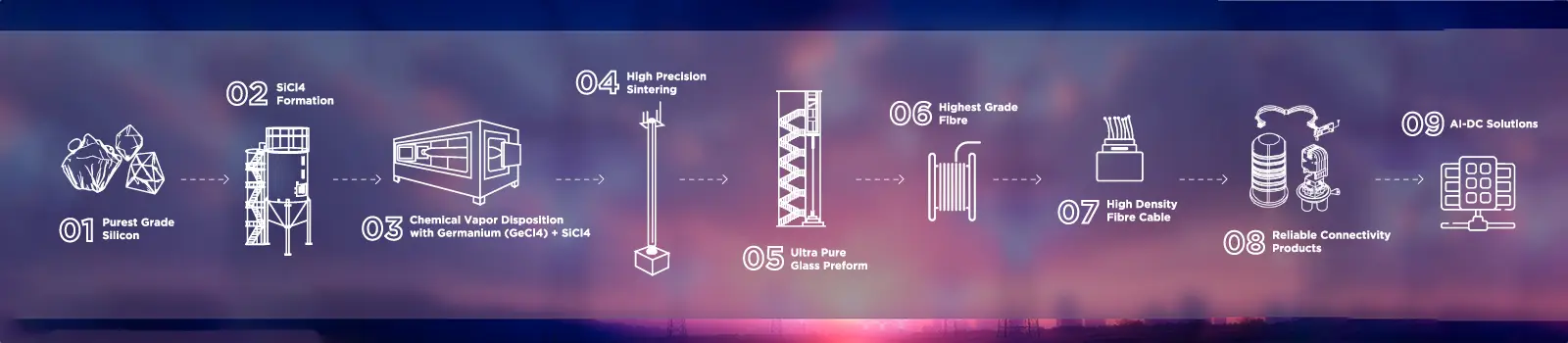
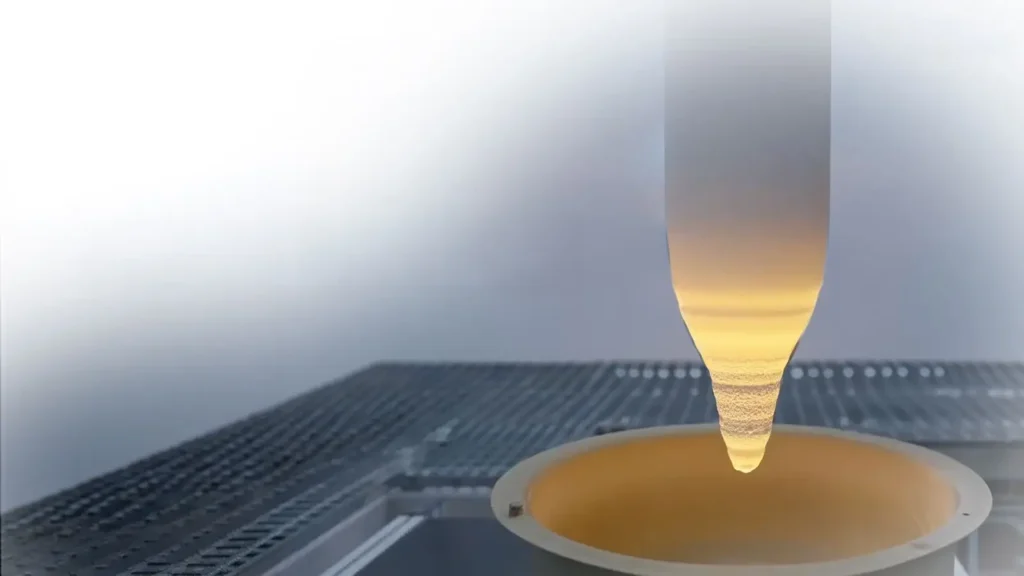
STL manufactures its own glass preforms; these are the glass cylinders from which all optical fiber is drawn. Owning the base of the supply chain is important, especially during times when fiber demand spikes.
This fiber independence enables STL to develop specialty fibers as we did with Multi-Core fiber (MCF), bend-optimised 200µm, 180 & 160µm formats ; these are the fiber technologies the next generation of AI GPU connectivity will be built on.
With 30 years of industrial-scale fiber manufacturing, STL has been the fiber backbone for network builders across Asia, North America, and Europe.
No two data centers are same and therefore STL cocreates solutions which are tailor-made for your data center build.

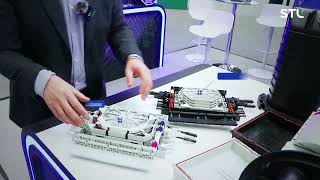
End-to-end FTTH solutions from advanced optical fibre cables to high-performance connectivity to speed rollout and lower total cost of ownership

During the trial, STL’s Multiverse™ Multi-Core 4-core Fibre.

With in-house expertise in glass science, material science, precision manufacturing, big picture understanding of network architectures, deep understanding of networking deployment and operations, STL brings complete control and predictability across digital connectivity value chain.

STL’s Celesta IBR Cable combines robust performance for duct installations with the productivity of high-count mass fusion splicing.

QNu Labs, incubated at IIT Madras Research Park in 2016 and backed by the National Quantum Mission.

STL a leading connectivity solutions provider for AI-ready digital infrastructure, today announced a significant..

QNu Labs, incubated at IIT Madras Research Park in 2016 and backed by the National Quantum Mission.
AI clusters can need 50,000–100,000 optical connections — exceeding entire legacy campus plants. At 400G/800G, higher-speed transceivers consume more fibres per port. Every cable buried today must serve GPU hardware not yet designed. Conservative fibre count specification is finished.
The 2020–2023 shortage cycle exposed every vendor without upstream manufacturing ownership. Preform supply became a bottleneck that cascaded through resellers simultaneously. For multi-phase builds, raw material resilience is now a tier-1 specification requirement.
The gap between specifying campus cable and first 800G deployment is typically 3–5 years. By 1.6T, the cable plant buried today is the only physical layer available. Specify for hardware not yet announced — with dark fibre reserve for two or three future transceiver generations.
Campus duct cannot be meaningfully expanded once a campus is operational. The fibre count at the initial pull is the highest-leverage specification decision in any build. A 6912F cable in a 110mm duct occupies ~38% of cross-section — leaving 62% free. Lowest total cost of ownership for any route used beyond Year 5.
MMC delivers 3,456 fibres per 1U — versus 576 from a 72-port MPO-8 panel. For 51.2Tbps spine switches, that is 1U versus 6U of patch field for the same switch. The VSFF transition is already underway on AI-first builds and requires ecosystems supporting both formats during migration.
Catalogue products serve median use cases. Hyperscale architectures rarely are median. Forcing catalogue products into non-standard topologies produces insertion loss failures, compliance issues, or routing constraints requiring costly workarounds. Co-creation — engineering bespoke to field-qualified product — is what separates tier-1 infrastructure partners
Your input is valuable to us. Fill out the form below and we’ll get in touch as soon as possible.
Please wait while you are redirected to the right page...