
From multiport service terminals and connectorized drop cables to pedestals, termination boxes, and aerial distribution hubs — STL's optical connectivity portfolio speeds FTTx deployment with factory-terminated, field-ready solutions.
Ensuring superfast, reliable, and cost-effective broadband means solving labor shortages and escalating install costs. STL’s optical connectivity portfolio connects the fiber distribution hub to the subscriber with plug-and-play speed.
Pre-connectorized and factory-terminated assemblies reduce field splicing and subscriber connection time.
IP-rated terminals, pedestals, and drop solutions engineered for poles, hand-holes, pedestals, and harsh outdoor conditions.
Port counts, splitter options, and modular assemblies that scale from SDU and MDU builds to aerial and rural deployments.
Explore STL’s full range of hardened, pre-connectorized, and premises connectivity solutions for FTTH and FTTx networks.

Multiport Service Terminal

Connectorized Drop Cable

SC/APC Pullable Drop Cable

Fiber Optic Accessories

Optical Pedestal

Fiber Optic Termination Box

Flexible Multiport Service Terminal

Subrack

Home Termination Box

Spliceless Concatenated Fiber Cable Assembly System

Fiber Distribution Hub
STL field application engineer Tim introduces the Aerial FDH — a fiber distribution hub designed to hang on the strand. Mounting on the strand means no pole attachment fees and no permitting, which has been a major hold-up for many customers.
The Aerial FDH comes in 144- or 288-output versions with 10 splitter slots plus 2 parking slots for unused splitters. It supports 1x16, 1x32, or 1x64 splitters and ships pre-stubbed with 100 feet of feeder and distribution fiber — in intermittently bonded ribbon, loose buffer tube, or micro cable.
Ryan Chappell, Vice President of Connectivity for STL North America, explains that a large tier-2 operator wanted to eliminate or greatly reduce fusion splicing in its network. Fusion splicers are hard to come by, so STL built a solution that removes that dependency.
CONCAT combines a closure with pre-terminated base-16 cables — a 16-fiber MPO in and 16 LCs out — in set lengths. With about 20 part numbers you can build an entire network with no fusion splicing.
At each node you plug in the MPO, unplug one LC position, and route a pigtail to the access side into the splitter input — a 1x4, 1x8, or other split. Drop cables can be spliced, or you can use pre-terminated SC/APC drops.
Yes. If you don’t want pre-terminated cables, the MPO-to-LC cassette comes out and a splice tray goes in — splicing up to 48 fibers in the box. The output cable continues to the next node, daisy-chaining up to 16 nodes in a row.
Each closure supports up to two branching cables. At an intersection — or when adding nodes later — you add a branching cable, unplug the next few LCs, plug them into the new output cable, and the network heads in a new direction.
STL’s newest release puts hardened drops on the output ports. It can be set up for splicing (up to 48 fibers, dropping one fiber to the drop splitter — for example a 1x8 giving eight hardened drops) or with the MPO-to-LC cassette. Combine pre-terminated MPO-to-LC with pre-terminated drops and the whole network needs no splicing.
Yes. The lid is replaceable and connects via a connector, so you can unplug it and swap it — for example, start with a 1x4 lid on day one and upgrade to a 1x8 lid as new homes come online.
OptoPull is popular for home penetrations — for example through concrete block with brick veneer — where a full-size SC/APC connector would require a large hole. It uses a factory-terminated, factory-polished SC/APC ferrule encapsulated in a protective metal housing.
The metal cap has a pulling eye, so you attach your pull thread and pull it straight through the duct with no wrapping or tying. The 3 mm cable is rated to 115 lb tensile. After pulling, remove the cap and pop on the SC/APC housing.
Besides the flexible 3 mm cordage, OptoPull comes on a stiffer 5 mm cable suited to pushing through conduit. It’s available with STL’s hardened connectors and regular SC/APCs, and on the new 3x5 flat drop cable for aerial self-support spans as well as home penetration.
Whether you need multiport terminals, connectorized drops, aerial distribution, or premises termination — talk to STL about the right optical connectivity mix for your network.
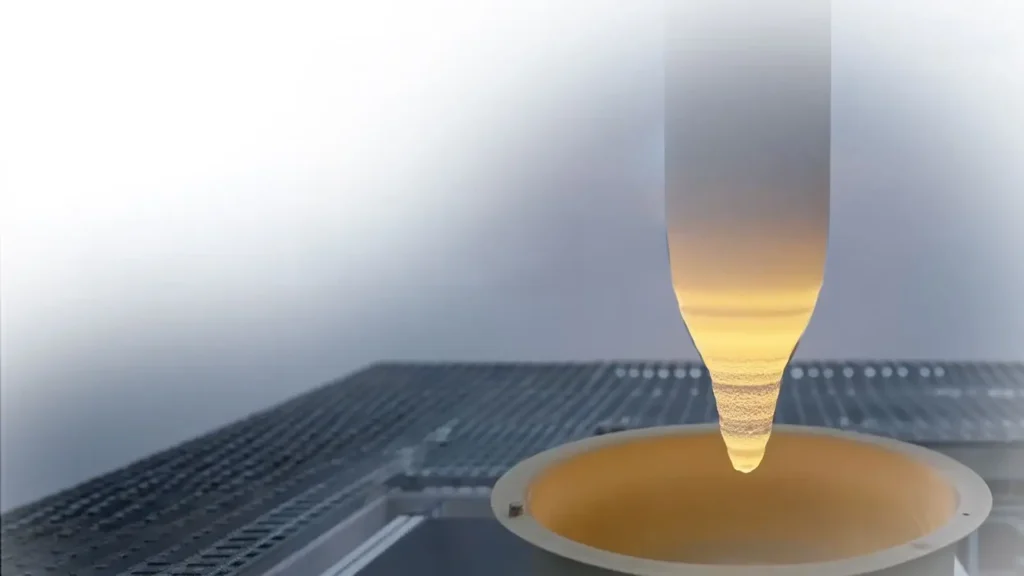
STL manufactures its own glass preforms; these are the glass cylinders from which all optical fiber is drawn. Owning the base of the supply chain is important, especially during times when fiber demand spikes.
This fiber independence enables STL to develop specialty fibers as we did with Multi-Core fiber (MCF), bend-optimised 200µm, 180 & 160µm formats ; these are the fiber technologies the next generation of AI GPU connectivity will be built on.
With 30 years of industrial-scale fiber manufacturing, STL has been the fiber backbone for network builders across Asia, North America, and Europe.
No two data centers are same and therefore STL cocreates solutions which are tailor-made for your data center build.

End-to-end FTTH solutions from advanced optical fibre cables to high-performance connectivity to speed rollout and lower total cost of ownership

During the trial, STL’s Multiverse™ Multi-Core 4-core Fibre.

With in-house expertise in glass science, material science, precision manufacturing, big picture understanding of network architectures, deep understanding of networking deployment and operations, STL brings complete control and predictability across digital connectivity value chain.

STL’s Celesta IBR Cable combines robust performance for duct installations with the productivity of high-count mass fusion splicing.

QNu Labs, incubated at IIT Madras Research Park in 2016 and backed by the National Quantum Mission.

STL a leading connectivity solutions provider for AI-ready digital infrastructure, today announced a significant..

QNu Labs, incubated at IIT Madras Research Park in 2016 and backed by the National Quantum Mission.
Your input is valuable to us. Fill out the form below and we’ll get in touch as soon as possible.
Please wait while you are redirected to the right page...